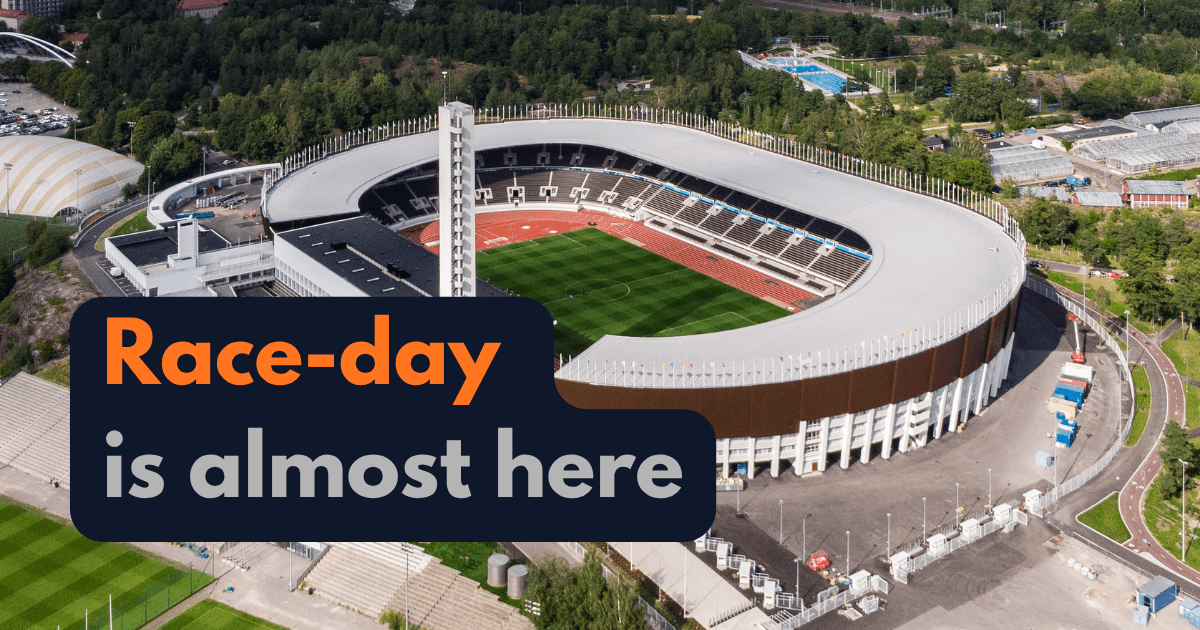

Really I underestimated the sheer amount of work. Looking back at months of training, a lot of the early wins turned out to be less durable than I thought.
I put training, researching and building the coach ahead of writing this blog.
But I've taken notes. I've documented my training journey. There will be "throwback" posts. But now it's almost race day.
Looking back at the past months, a lot of the early wins and discoveries turned out to be less durable than I thought.
Running
Most training plans are structured around distance progression. I followed that too. Turned out that approach has little modern thinking behind it.
My long runs stretched to over 3,5 hours, which partly caused plantar fasciitis that I've been trying to manage for the past 8 weeks.
Turns out, time is a much better metric for planning your runs. As you get faster, your volume grows naturally and safely.
Long runs reach a tipping point around 2,5 hours for most runners: extend that duration and injury risk grows exponentially while training benefit plateaus.
It's also much easier to plan, as 45 minutes is always 45 minutes. Time-based running also evens out weather, terrain and other aspects to keep training load even.
It's not any single run that matters, it's the total cumulative volume you can do and keep doing without pushing your tissues beyond their recovery capacity.
Mobility
I've done well over a 100 stretching sessions, both dynamic warm ups and static post-run stretching. The traditional stuff many running magazines and publications promote.
Some of it has been somewhat useful. Most of it not.
In the last few weeks, I've switched my mobility work to yoga. It has been far superior. My stride has felt smoother. I've fixed a nagging hip/groin issue I've had for months.
Yoga has also come with an underappreciated benefit: priming your mind and breath for running.
I'll never go back to standard stretching.
Strength
The results with strength training have been varied.
My strength training has done its most important part: preventing any major injuries that sideline my running.
However, I don't think I've gained any considerable strength despite doing it 2+ times per week. It's not entirely surprising as running takes up a lot of my recovery capacity.
Also, much of my strength training through base and most of build was standard runner's strength stuff. Not wrong, just not up to standard for me.
Years ago I was doing Starting Strength by Mark Rippetoe and other all purpose strength work while running quite a lot, and it was far superior.
I just don't have the time for the gym trips with all the running and life's other responsibilities, so I've found a modality that provides much of the same benefits, some better ones, and available at home with minimal equipment: proper classic Russian-style kettlebells mixed with some running-specific exercises.
Endurance cross-training
Strength keeps me intact. Cross-training keeps me fresh.
Sometimes running more is just not good. The legs just need a break from all the pounding. I've been trying a few options, and swimming has turned out to be the best, by far.
It's zero impact. It trains your breath like no other. It's a great counterbalance to running with its upper-body focus and posture-opening movement. It's just great, especially the day after long runs.
However, no amount of swimming can replace running. If you're chasing a 2:30 marathon, it's probably not for you — at that elite level swimming gets in the way of more running. For everyone else — aiming to be healthy, run marathons into your old age, and enjoy life — it's definitely worth having as a core part of your training method.
What's next?
On Saturday, I'm running my first marathon, while still dealing with plantar fasciitis. We'll see how it goes. Confident overall, but the feet are a mystery.
What comes next is a new marathon in September. I'll do my full training season with the four modalities outlined above.
The core of this training was refined over the last 7 or 8 months.
The next 4 months will be the test of it. The 1stMarathon app has gone through tens of iterations, and it's finally for the most part where I want it to be.
Now it's time to put the method to a real test with the second marathon.
Nico
Founder of 1st Marathon · First-time marathoner